
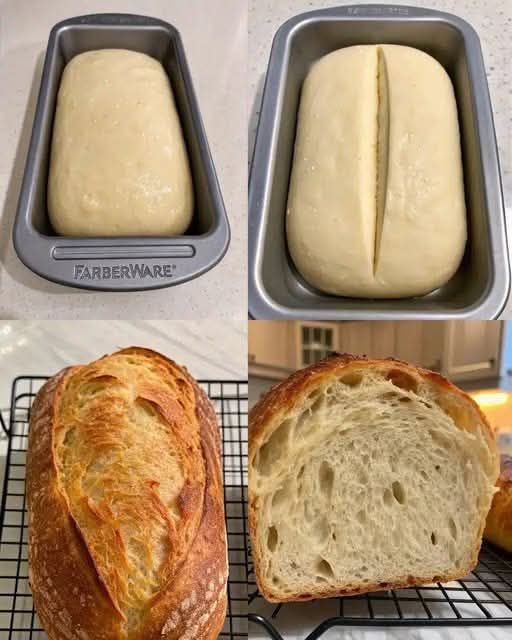
If you’ve ever wanted to bake fresh bread at home, this Sourdough Bread Recipe is the perfect place to start. There is something really special about making bread from just flour, water, salt, and a natural starter. It feels simple, old-fashioned, and honestly very rewarding.
I still remember my first successful loaf. It wasn’t perfect, but when I cut into it and saw that soft, airy inside, I felt so proud. Since then, this Sourdough Bread Recipe has become one of my favorite kitchen routines. It’s slow, calming, and the smell of baking bread makes the whole house feel warm and cozy.
Sourdough bread is also a healthier choice compared to many store-bought breads. The natural fermentation makes it easier to digest and gives it a rich, slightly tangy flavor. If you’re looking for a wholesome homemade bread, this Sourdough Bread Recipe is worth trying.
Why You Will Love This Recipe
- Simple ingredients: Just basic pantry items
- No commercial yeast needed: Uses natural sourdough starter
- Better digestion: Fermented bread is gentler on the stomach
- Crispy crust, soft inside: Perfect bakery-style texture
- Very rewarding: Homemade bread always feels special
Ingredients List
To make this easy Sourdough Bread Recipe, you will need:
- 3 cups (375g) bread flour or all-purpose flour
- 1 cup (240g) active sourdough starter
- 1 ¼ cups (300ml) water (room temperature)
- 1 ½ teaspoons salt
Optional:
- Rice flour (for dusting)
- Olive oil (for soft crust variation)
Step-by-Step Instructions
Step 1: Mix the Dough
In a large bowl, mix flour and water until no dry flour remains. Cover and let it rest for 30 minutes.
This step is called autolyse and helps improve texture.
Step 2: Add Starter and Salt
Add your active sourdough starter and salt to the dough. Mix well until combined.
The dough will feel sticky—that is completely normal.
Step 3: Stretch and Fold
Instead of kneading, gently stretch and fold the dough every 30 minutes for 2 hours.
This builds strength and structure in your Sourdough Bread Recipe.
Step 4: Bulk Fermentation
Cover the bowl and let the dough rise for 4–6 hours at room temperature.
It should become airy and slightly doubled in size.
Step 5: Shape the Dough
Place the dough on a floured surface. Shape it into a round or oval loaf.
Be gentle so you don’t remove too much air.
Step 6: Second Rise
Place the shaped dough in a bowl or proofing basket. Cover and let it rest for 1–2 hours.
You can also refrigerate overnight for deeper flavor.
Step 7: Bake the Bread
Preheat oven to 230°C (450°F). Place a Dutch oven inside to heat.
Carefully place the dough inside, score the top, and bake.
- Bake covered for 20 minutes
- Then bake uncovered for 20–25 minutes
Your Sourdough Bread Recipe should turn golden and crusty.
Step 8: Cool Before Slicing
Let the bread cool for at least 1 hour before cutting.
This helps the texture set properly.
Pro Tips & Variations
- Use active starter: It should be bubbly and doubled in size
- Don’t rush fermentation: Time gives better flavor
- Add seeds: Sunflower, sesame, or flax seeds work great
- Try whole wheat flour: For a more rustic taste
- Steam baking option: Place water tray in oven if no Dutch oven
Mistake to avoid: Cutting the bread too early. It can make the inside gummy.
Health Benefits
This Sourdough Bread Recipe is not only tasty but also offers some health benefits:
- Easier digestion: Natural fermentation breaks down gluten
- Better gut-friendly option: Contains beneficial bacteria
- No preservatives: Clean and homemade ingredients
- Lower glycemic impact: May help steady energy levels
It’s a great choice for people looking for more natural bread options.
Serving Suggestions
You can enjoy this Sourdough Bread Recipe in many simple ways:
- Toast with butter or jam
- Serve with soups and stews
- Make sandwiches for lunch
- Drizzle with olive oil and herbs
It also tastes amazing fresh out of the oven.
Storage Tips
- Room temperature: Store in cloth or paper bag for 2–3 days
- Avoid fridge: It can dry out the bread
- Freezer: Slice and freeze for up to 2 months
Reheat slices in a toaster or oven for fresh taste.
Frequently Asked Questions (FAQs)
1. Why is my sourdough bread dense?
Your starter may not be active or fermentation time was too short.
2. Can I make sourdough without a Dutch oven?
Yes, but add steam by placing water in a tray inside the oven.
3. How do I know my starter is ready?
It should be bubbly, active, and double in size.
4. Can I use all-purpose flour?
Yes, but bread flour gives better structure.
5. Why is sourdough bread healthy?
Because it is naturally fermented and easier to digest.
Conclusion
This Sourdough Bread Recipe is simple, traditional, and deeply satisfying. It may take time, but every step is worth it when you smell that fresh homemade bread.
I truly enjoy making this recipe because it feels slow, calming, and rewarding. Once you try it, you’ll understand why so many people love baking sourdough at home.
Give this Sourdough Bread Recipe a try and enjoy the magic of homemade bread
Leave a Reply