
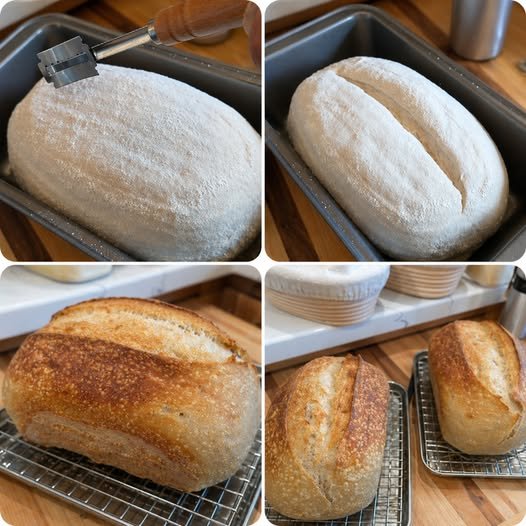
There’s something truly magical about baking your own Sourdough Bread at home. The smell, the crust, and that soft, slightly tangy inside—it feels like a small victory every time. I still remember my first loaf. It wasn’t perfect, but it was made with patience and love, and that made it special.
This Sourdough Bread recipe is simple, beginner-friendly, and doesn’t require fancy tools. It uses natural fermentation, which makes it easier to digest and better for your gut. If you’ve ever wanted to bake your own bread but felt nervous, this is the perfect place to start.
Let’s make something beautiful together.
Why You Will Love This Recipe
- 🥖 Simple and beginner-friendly – No complicated steps
- ❤️ Healthier option – Natural fermentation supports digestion
- 😋 Amazing taste – Slightly tangy flavor with a crispy crust
- 🏡 Feels homemade and comforting – Perfect for family meals
- 💰 Budget-friendly – Uses basic pantry ingredients
Ingredients List
Here’s everything you need to make this delicious Sourdough Bread:
- 1 cup active sourdough starter
- 3 cups all-purpose flour (or bread flour)
- 1¼ cups warm water
- 1 teaspoon salt
💡 Tip: Make sure your sourdough starter is bubbly and active before using.
Step-by-Step Instructions
Step 1: Mix the Dough
In a large bowl, combine the sourdough starter and warm water. Mix well until smooth.
Now add the flour and salt. Stir everything together until it forms a rough dough.
Step 2: Rest the Dough (Autolyse)
Cover the bowl and let the dough rest for 30–45 minutes.
This helps the flour absorb water and makes the dough easier to handle.
Step 3: Stretch and Fold
Instead of kneading, gently stretch one side of the dough and fold it over.
Do this 4–5 times around the bowl.
Repeat this process every 30 minutes for about 2 hours.
💡 This step builds strength in your dough without hard work.
Step 4: First Rise (Bulk Fermentation)
Cover the bowl and let the dough rise at room temperature for 6–8 hours or overnight.
The dough should double in size and look soft and airy.
Step 5: Shape the Dough
Lightly flour your surface. Gently place the dough on it.
Shape it into a round ball by folding the edges inward.
Step 6: Second Rise
Place the shaped dough into a bowl lined with a floured cloth.
Cover and let it rest for 1–2 hours.
Step 7: Bake the Bread
Preheat your oven to 230°C (450°F).
Place a baking pot (or tray) inside the oven to heat.
Carefully transfer the dough into the hot pot. Score the top with a knife.
Bake for:
- 20 minutes with lid (if using pot)
- 20–25 minutes without lid until golden brown
Step 8: Cool Before Slicing
Let your Sourdough Bread cool completely before cutting.
Yes, it’s hard to wait—but it’s worth it!
Pro Tips & Variations
- 🌾 Use bread flour for a chewier texture
- 🌿 Add herbs like rosemary or garlic for extra flavor
- 🧀 Mix in cheese for a rich twist
- ❌ Avoid adding too much flour—it can make bread dense
- ⏳ Be patient—good sourdough takes time
💡 If your bread is too sour, reduce fermentation time next time.
Health Benefits of Sourdough Bread
One of the best things about Sourdough Bread is that it’s not just tasty—it’s also healthier than regular bread.
- ✔️ Easier to digest due to natural fermentation
- ✔️ Contains beneficial bacteria for gut health
- ✔️ Lower in gluten compared to regular bread
- ✔️ Helps maintain steady blood sugar levels
It’s a great choice if you’re trying to eat clean and feel good.
Serving Suggestions
You can enjoy Sourdough Bread in so many ways:
- 🍳 With eggs for breakfast
- 🥑 With avocado and chili flakes
- 🥪 As a sandwich base
- 🍲 Alongside soups or curries
- 🧈 Simply toasted with butter
Honestly, even plain slices taste amazing!
Storage Tips
To keep your Sourdough Bread fresh:
- 🏡 Store at room temperature in a cloth bag for 2–3 days
- ❄️ Freeze slices for up to 1 month
- 🔥 Reheat in oven or toaster for best taste
💡 Avoid storing in plastic—it can make the crust soft.
Frequently Asked Questions (FAQs)
1. Why is my sourdough bread dense?
It may not have fermented long enough. Give it more time to rise.
2. Can I make sourdough without a starter?
A starter is essential. It’s what gives sourdough its unique flavor and texture.
3. How do I know my starter is ready?
It should be bubbly, active, and double in size after feeding.
4. Why is my bread too sour?
It likely fermented too long. Try reducing the rising time next time.
5. Can I use whole wheat flour?
Yes, but mix it with all-purpose flour for a softer loaf.
Conclusion
Making your own Sourdough Bread at home may seem challenging at first, but once you try it, you’ll fall in love with the process. It’s simple, rewarding, and deeply satisfying.
The crust, the flavor, and the joy of baking something from scratch—it’s all worth it.
So don’t overthink it. Start today, trust the process, and enjoy every step. Your perfect loaf is waiting. 🥖✨
Leave a Reply